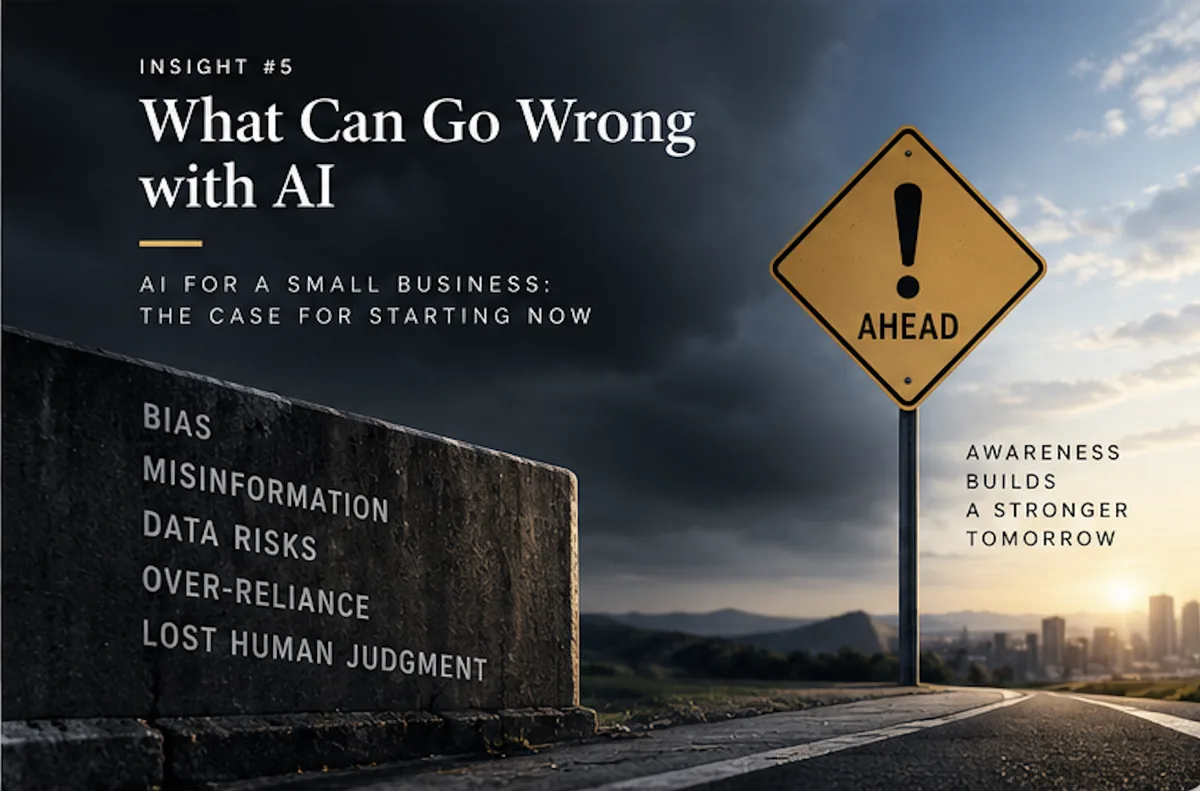
What Can Go Wrong with AI—and What to Do About It
By R.A. Clifton • Published 9/22/2026
A credible AI report gets less exciting here. Apprehension deserves straight answers, not a sales pitch.
The real risks: inaccurate output, privacy and security exposure, shadow AI use among employees, weak ROI from pilots that feel productive without improving the workflow, overbuilding custom programs before use cases are proven, and regulatory or professional exposure.
The good news: Governance does not have to begin with a 47-page binder. Approved tools, a one-page acceptable-use policy, human-review rules and a simple incident path can close a meaningful amount of risk.
Small firms lag on safeguards: only about 9% monitor AI systems once deployed, roughly 36% have an incident-response plan, and just over half have any written AI use policy. Among tax firms specifically, some 70% have no policy guiding generative-AI use.
The standing checklist: written acceptable-use policy, no sensitive data in unapproved consumer tools, human review before consequential output, verification of AI citations against primary sources, a simple incident path for bad output, and periodic review of tools and policy.
Done right, governance is not a burden—it is a competitive advantage.